The 10 Best Gut Health Supplements of 2026, Ranked by CFU and Cost

Probiotic labels compete on one number, and the numbers barely relate to each other. Physician’s Choice prints 60 billion CFU and costs about 83 cents a day. Align prints 1 billion and costs 96 cents. The cheaper bottle also carries 146,339 Amazon ratings against Align’s 1,024.
That gap explains the whole shelf. Align sells one strain, Bifidobacterium longum 35624, which is the strain most IBS trials have used. Physician’s Choice sells ten strains plus a prebiotic at a lower cost per billion. Neither bottle is better in the abstract; they answer different questions, and the label does not tell you which one you are buying. Seven of the ten picks below are probiotics; one is a digestive enzyme and two are fiber.
Why take a gut supplement at all
Probiotics are not a general wellness upgrade. The strongest evidence sits in narrow cases: antibiotic-associated diarrhea, some IBS symptoms, and preventing Clostridioides difficile diarrhea in people taking antibiotics. A 2020 review in the journal Gut found strain-specific effects, which is why “10 strains” is not automatically better than one strain with a trial behind it.
Fiber has a plainer case. Most adults eat around 15 grams a day against a recommendation of roughly 25 to 38 grams, and soluble fiber from psyllium or wheat dextrin helps with regularity at a fraction of the price of a probiotic. If constipation is the main complaint, fiber is usually the cheaper first move. Enzymes are narrower still: they help break down fat, protein and carbohydrate in a meal, so they suit people who feel heavy after fatty food, not people chasing a microbiome fix.
What none of these do is repair a damaged gut lining in a week, replace a diagnosis, or cancel a highly processed diet. They are small tools with specific jobs, and the cost per serving decides whether a three-month trial is worth running at all. At 37 cents a day, a three-month trial costs about $34. At 96 cents, it costs about $88.
What the main gut ingredients actually do
| Ingredient | What it does | What to check on the label |
|---|---|---|
| CFU | The count of live cultures in the bottle | CFU at the end of shelf life, not at manufacture |
| Strain | Different strains do different jobs | Genus, species and strain code (LGG, 35624) |
| Prebiotic | Feeds the cultures already in your gut | Grams of inulin, FOS or wheat dextrin |
| Digestive enzymes | Breaks down fat, protein and carbs in a meal | Units per capsule and which enzymes are listed |
| Psyllium | Soluble fiber that bulks and softens stool | Grams per serving and the liquid you must drink |
| Wheat dextrin | Soluble fiber that dissolves clear | Grams per serving and whether it is flavored |
| Delayed-release capsule | Helps cultures survive stomach acid | “Delayed release” or “enteric coated” on the bottle |
| Shelf-stable format | No refrigeration needed | Storage instructions and expiry count |
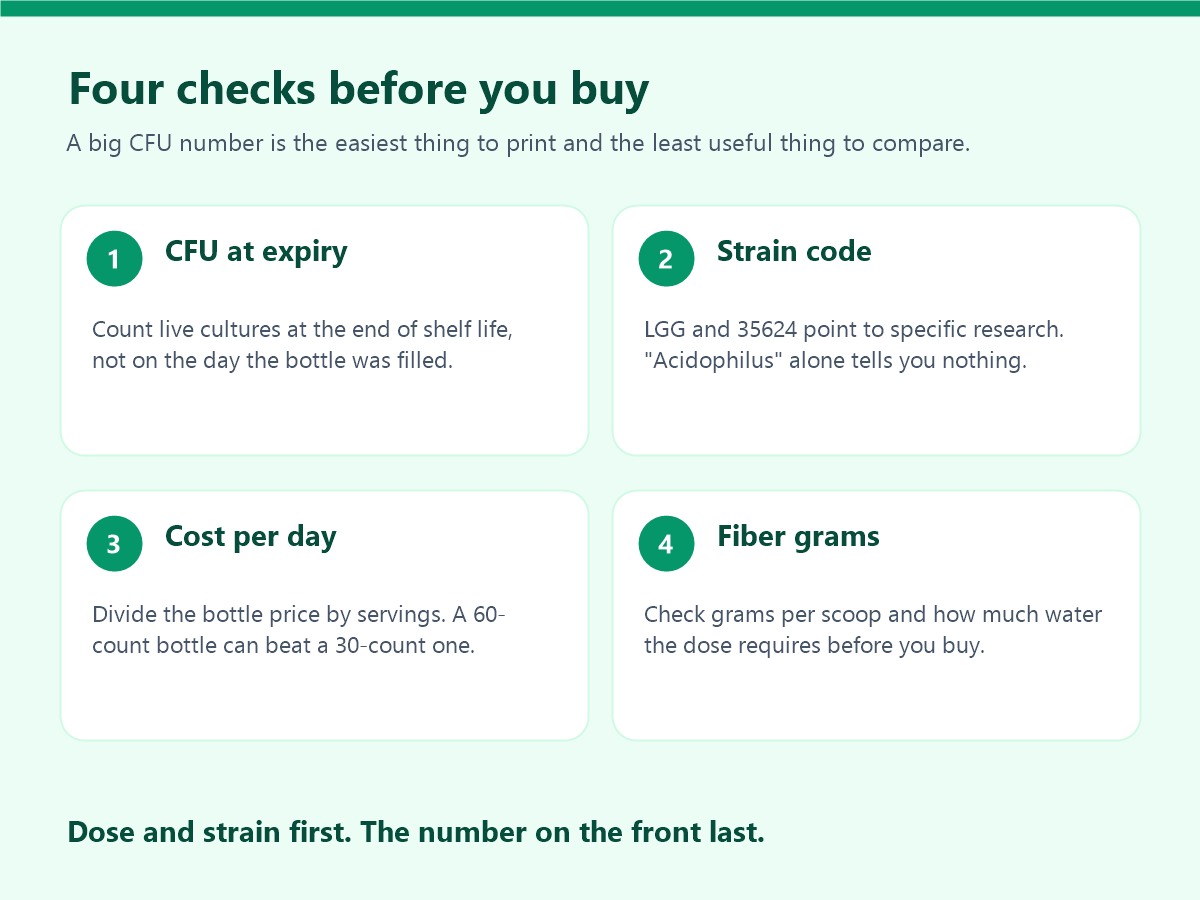
Two label habits cause most of the confusion. First, CFU counts are measured at different points. A bottle that says “1 billion CFU” may be promising that at the expiry date, while a “60 billion” bottle may be counting at manufacture, before the cultures die off in storage. Second, strain matters more than species. “Lactobacillus acidophilus” covers many strains with different research behind them; a strain code is the only way to match a bottle to a study.
Fiber labels have their own trap. Benefiber’s serving is two teaspoons for 3 grams of fiber, so a heaped spoon quietly changes the dose. Metamucil’s serving is 2.4 grams of soluble fiber and requires a full glass of water; taking it dry is uncomfortable and, in rare cases, risky.
Quick comparison
| Pick | Servings | Cost per serving | Best for |
|---|---|---|---|
| Physician’s Choice | 30 | ~$0.83 | Highest CFU |
| Culturelle | 30 | ~$0.58 | One studied strain |
| Align | 28 | ~$0.96 | IBS symptoms |
| Renew Life | 30 | ~$0.79 | 12-strain blend |
| Jarrow EPS | 60 | ~$0.59 | 8 strains, 2 caps |
| CGN LactoBif | 60 | ~$0.37 | Lowest cost |
| Garden of Life | 30 | ~$0.92 | Organic formula |
| Enzymedica | 90 | ~$0.18 | Heavy meals |
| Benefiber | 125 | ~$0.18 | Invisible fiber |
| Metamucil | 180 | ~$0.19 | Constipation |
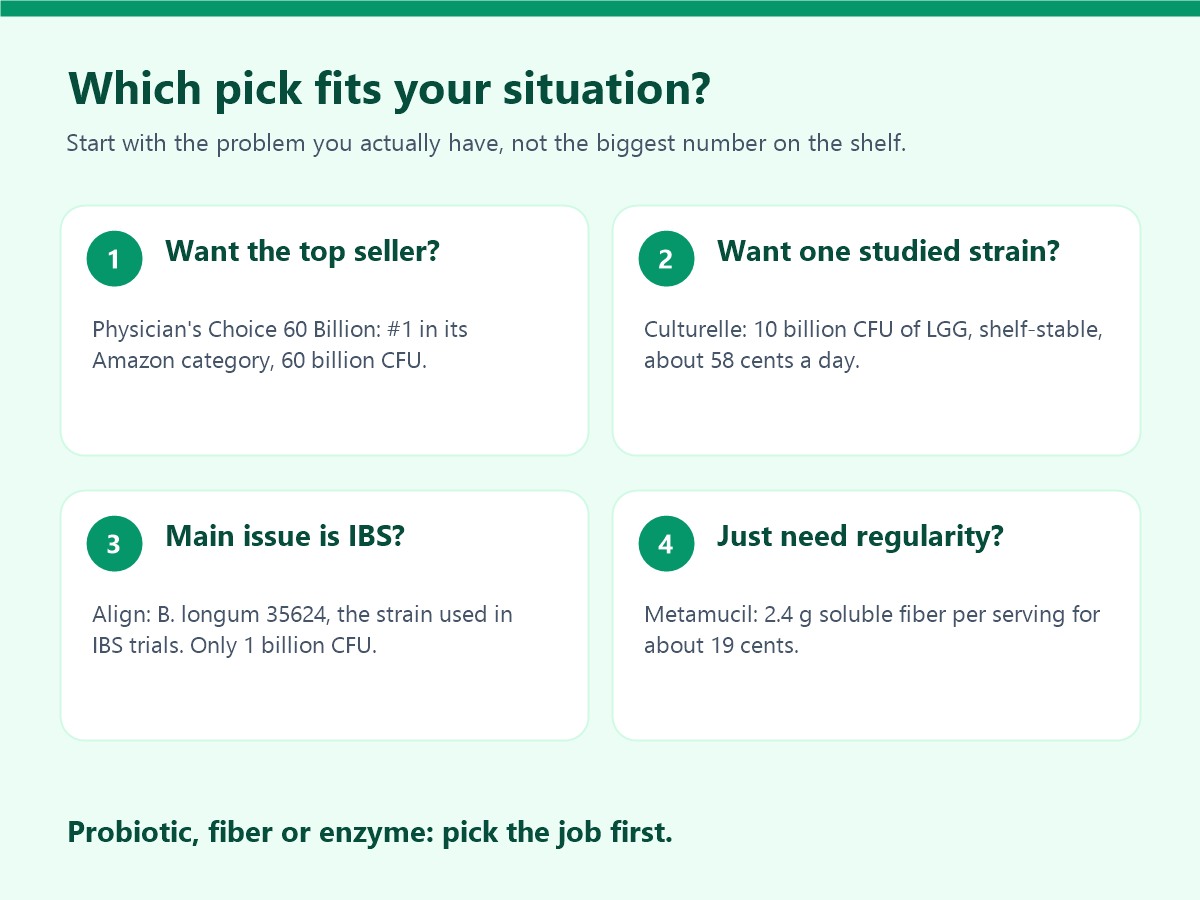
1. Best overall: Physician’s Choice Probiotics 60 Billion
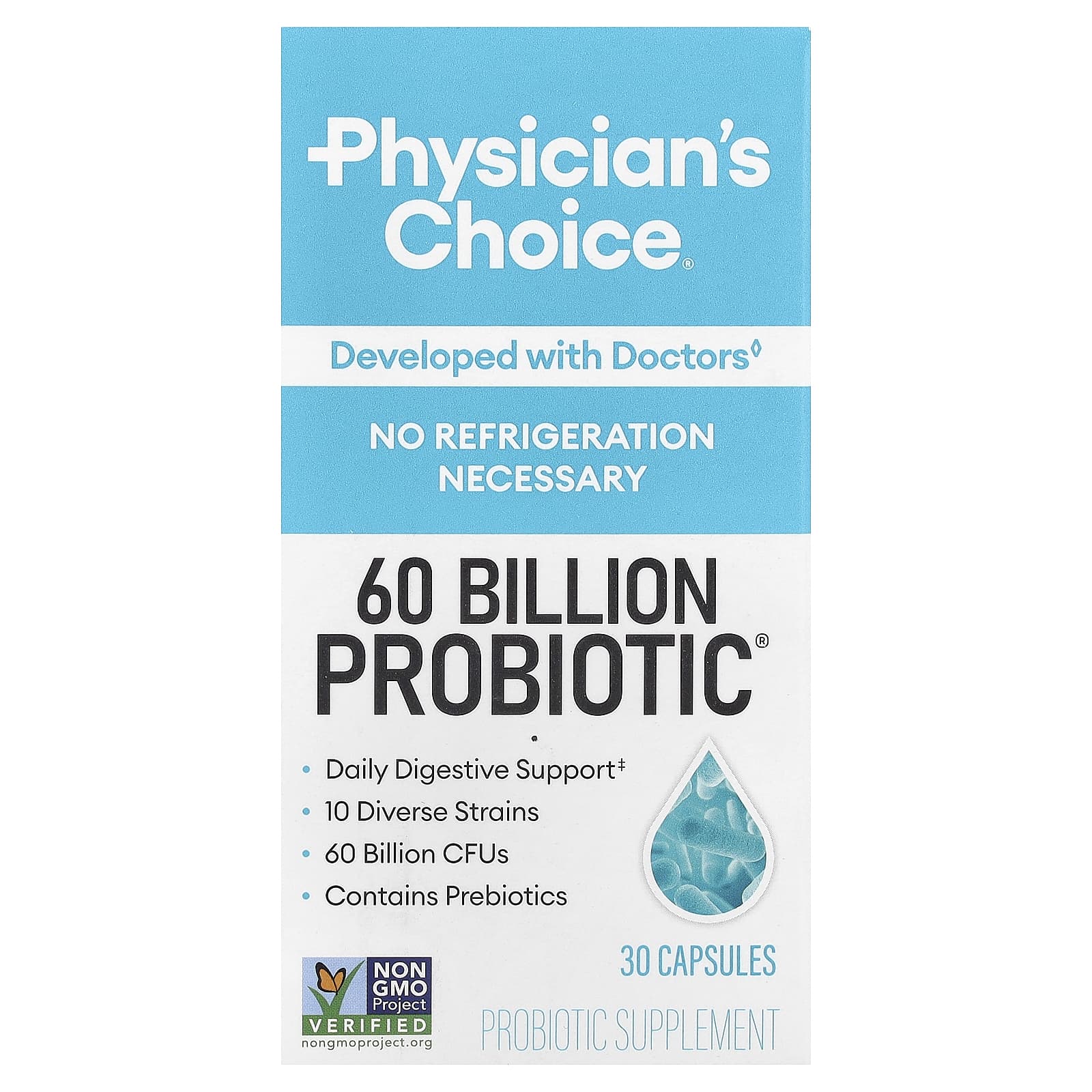
Physician's Choice Probiotics 60 Billion CFU, 30 Capsules
#1 in Amazon's Acidophilus category with 146,339 ratings.
The highest CFU count here at a mid-range daily cost; one capsule a day.
This is the volume leader of the category: #1 in Amazon’s Acidophilus rankings with 146,339 ratings at 4.6 stars, sold by the brand’s own Amazon store. One capsule carries 60 billion CFU across ten strains plus 150 mg of prebiotic, and 30 capsules cost about $24.97, which works out to 83 cents a day.
The catch is that a high CFU count is a marketing number as much as a dose. Ten strains in one capsule also means each strain gets a small share of the total. Buyers who want one well-studied strain should look at Culturelle or Align instead. Buyers who want the most live cultures per dollar and one capsule a day get a straightforward answer here.
Strengths
- 60 billion CFU plus 150 mg prebiotic in a single capsule
- #1 in Amazon’s Acidophilus category with 146,339 ratings
- Sold by Physician’s Choice on Amazon, no refrigeration needed
What buyers say
“Not everyone needs 60 billion, but it’s quite nice.” — taigastar, Luxembourg, Feb 2026
“This supplement stands out for its quality and carefully selected ingredients.” — iHerb verified buyer, Bulgaria, Apr 2025
“I have to say I’m a bit disappointed with the Physician’s Choice 60 Billion Probiotic.” — HAGIT, Israel, Jun 2025
Specs: 30 capsules (30 servings) · 1 capsule daily · 60 billion CFU, 10 strains
Check price on Amazon · Check price on iHerb
2. Best mainstream single strain: Culturelle Digestive Daily
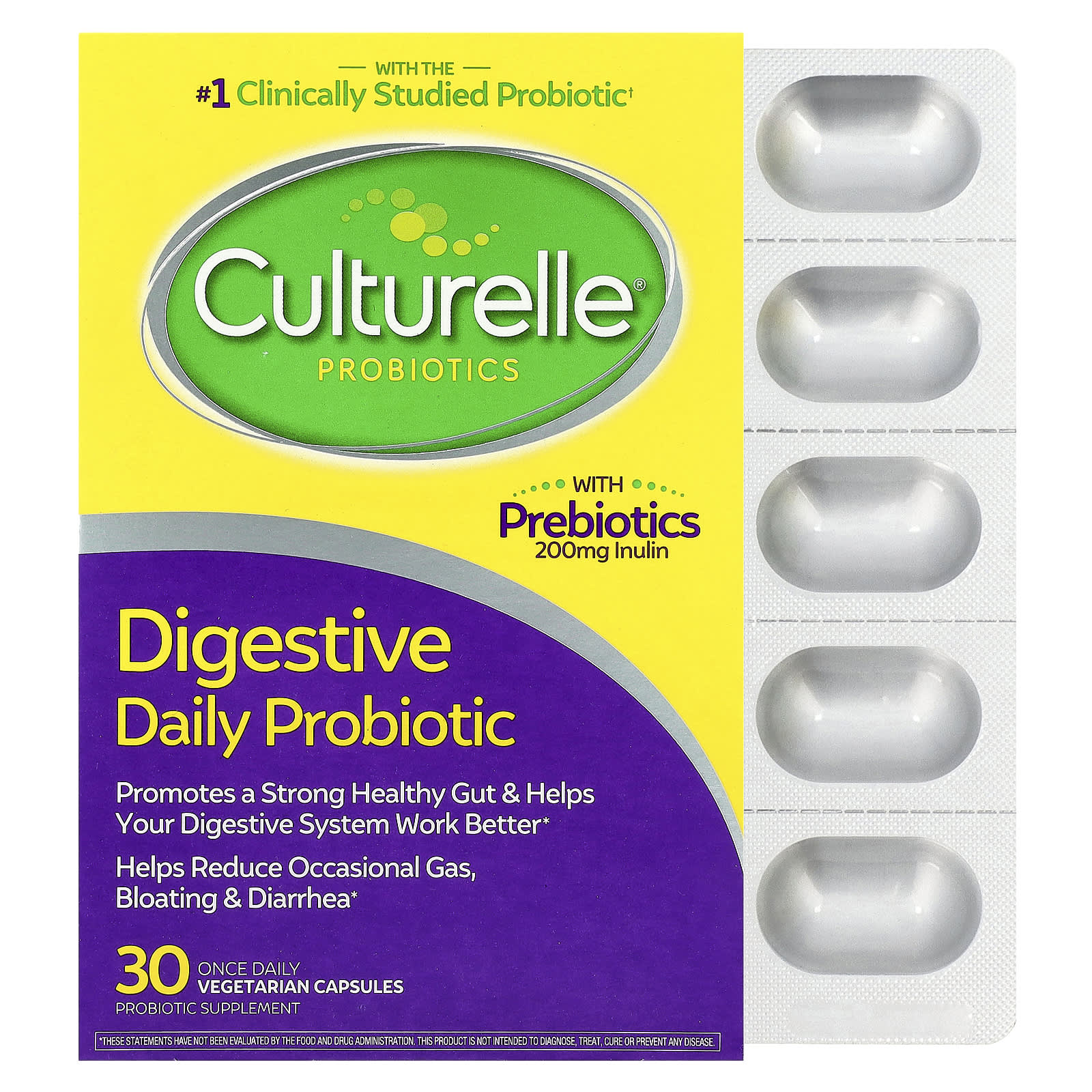
Culturelle Digestive Daily Probiotic, 10 Billion CFU, 30 Vegetarian Capsules
Shelf-stable, sold by Amazon.com, 10,470 ratings at 4.7.
One well-studied strain instead of a broad blend, and no refrigeration needed.
Culturelle is the bottle most people recognize, and its 10 billion CFU all come from one strain, LGG, which has been studied for diarrhea and antibiotic recovery. It is shelf-stable, sold by Amazon.com, and 30 capsules cost about $17.47, or 58 cents a day. The 4.7-star average comes from 10,470 Amazon ratings and 3,465 on iHerb.
Ten billion is modest next to the 60 billion bottle above, and that is the point: the strain has research behind it, and the price is lower. The trade-off is that LGG does one job well rather than covering bloating, regularity and immunity in one capsule.
Strengths
- Single LGG strain with published research behind it
- Shelf-stable with no refrigeration, and sold by Amazon.com
- 200 mg inulin included, so the strain has a food source
What buyers say
“I sense the benefits almost straight away, it really helps digestion.” — Iri, Switzerland, Nov 2025
“This is so good for health problem.” — iHerb verified buyer, Qatar, Dec 2025
“Felt bloated after taking this and a lot of gas in stomach .” — iHerb verified buyer, Singapore, Jan 2025
Specs: 30 vegetarian capsules (30 servings) · 1 capsule daily · 10 billion CFU LGG
Check price on Amazon · Check price on iHerb
3. Best for IBS: Align Probiotic 24/7
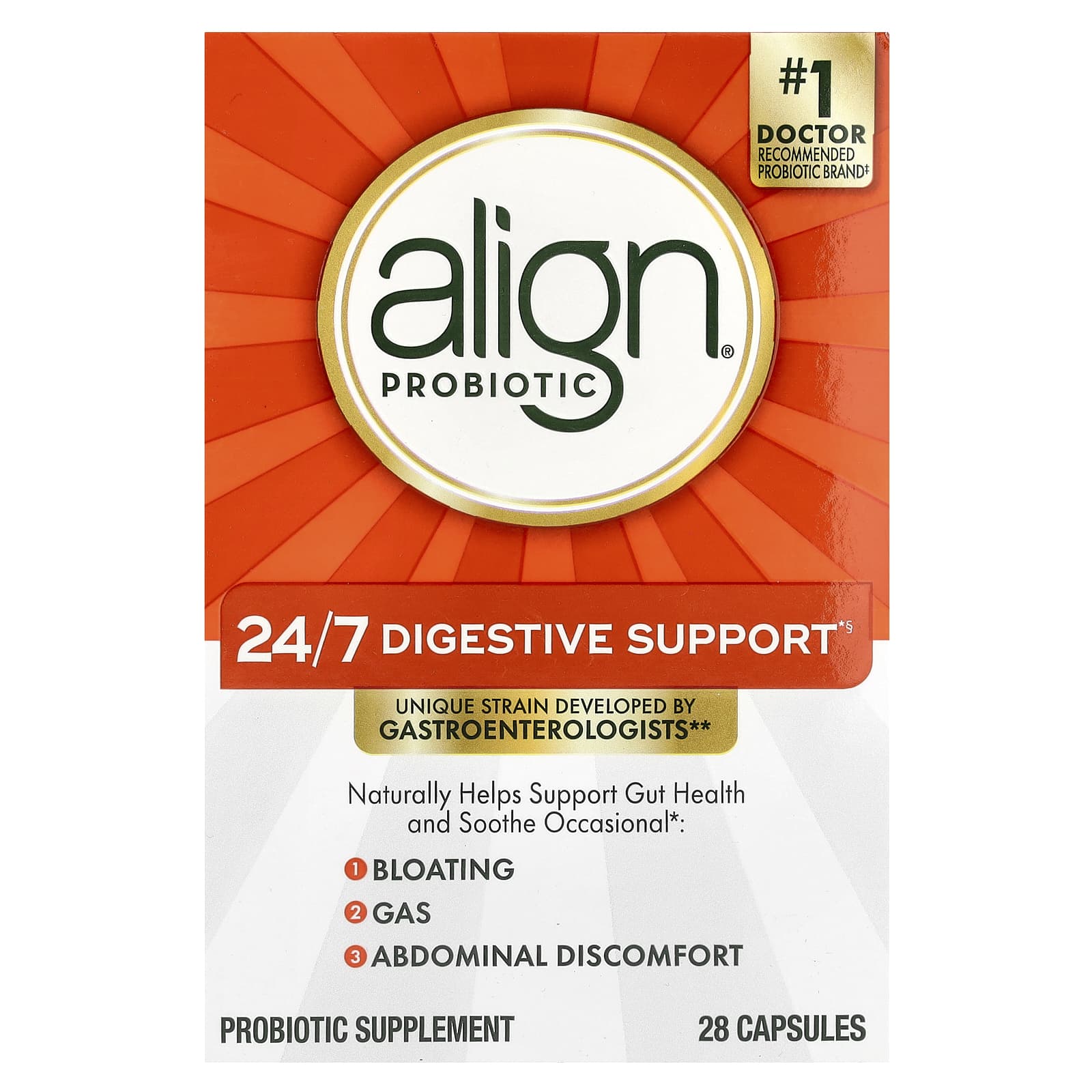
Align Probiotic 24/7 Digestive Support, 28 Capsules
The strain used in most IBS probiotic trials; no refrigeration.
Only 1 billion CFU and the priciest serving here — you are paying for one specific strain.
Align sells 1 billion CFU, which looks like a misprint next to 60 billion bottles. The number is low because the product is built around one strain, Bifidobacterium longum 35624, the strain used in the best-known IBS probiotic trials. Twenty-eight capsules cost about $26.99, the highest serving cost in this guide at 96 cents a day.
If your problem is occasional bloating after a big meal, this is an expensive way to address it. If a doctor has pointed you toward strain-specific probiotics for IBS, the narrow formula is the reason to pay. Amazon’s ranking sits at #533 in the probiotic category, so popularity is not the argument here; the strain is.
Strengths
- Single strain, B. longum 35624, used in IBS research
- No refrigeration and a small capsule that is easy to take daily
- 4.5 stars from 1,024 Amazon ratings and 376 on iHerb
What buyers say
“I’ve tried many different probiotics, and this is the one that suits me best; it has improved my constipation.” — iHerb verified buyer, United States, Apr 2026
“It’s gentle on the stomach, easy to take daily, and I noticed a big improvement in bloating and overall digestion within the first week.” — Carina, United Arab Emirates, Oct 2025
“No benefit at all Still bloated and constipation Used for more than a month without any noticed effectiveness” — iHerb verified buyer, Cyprus, Jun 2025
Specs: 28 capsules (28 servings) · 1 capsule daily · 1 billion CFU, B. longum 35624
Check price on Amazon · Check price on iHerb
4. Best 12-strain blend: Renew Life Extra Care 30 Billion
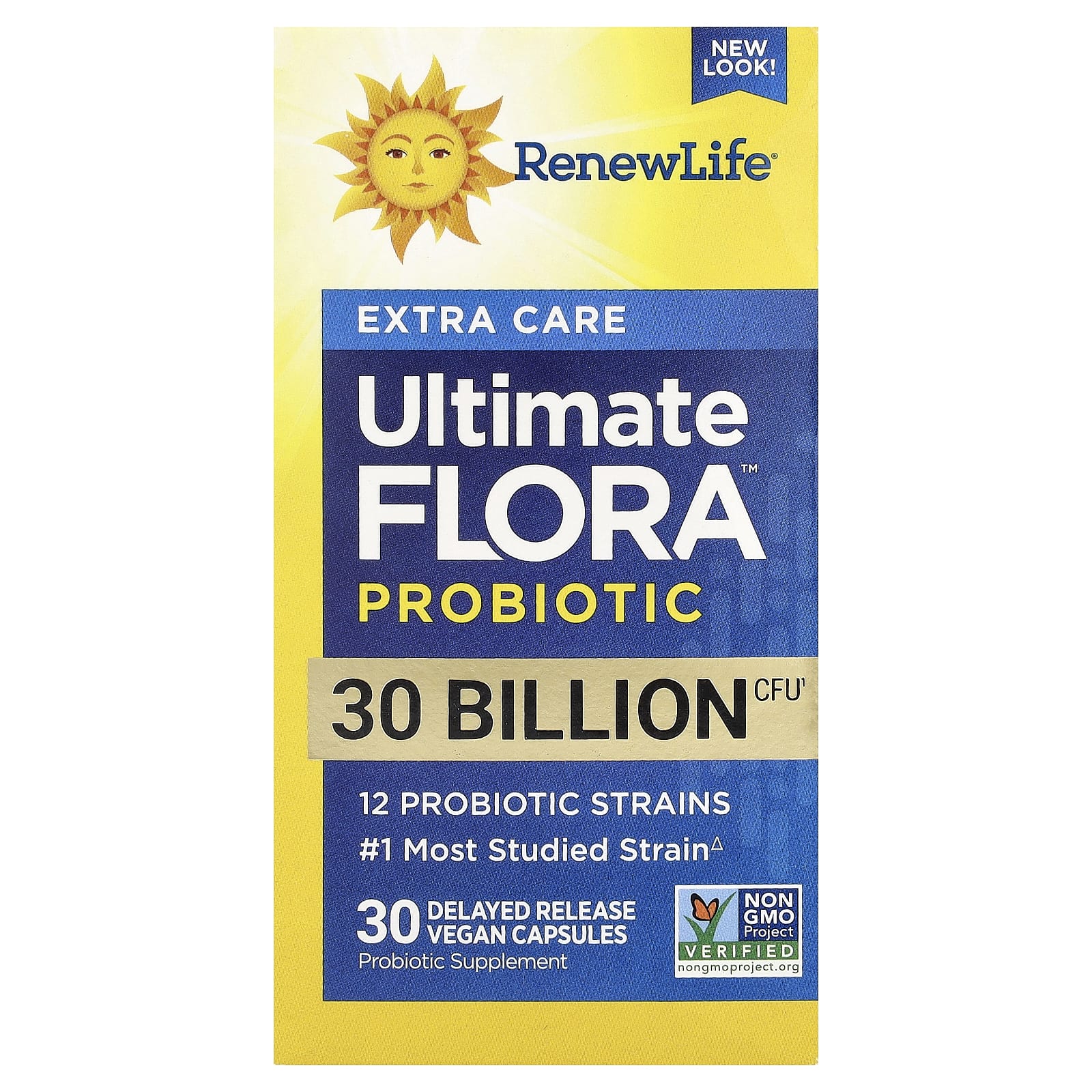
Renew Life Extra Care Probiotic, 30 Billion CFU, 30 Capsules
#408 in Amazon's Acidophilus category; shelf-stable.
Bifido-heavy blend; its 4.4-star Amazon average is the lowest among the probiotics here.
Renew Life splits 30 billion CFU across 12 strains, weighted toward bifidobacteria, in a delayed-release capsule. Thirty capsules cost about $23.83, or 79 cents a day, and the bottle is shelf-stable. It sits at #408 in Amazon’s Acidophilus category, so it sells steadily without being a bestseller.
The honest caveat is the rating: 4.4 stars from 374 Amazon ratings is the weakest average among the probiotics in this guide, and iHerb’s 569 ratings sit higher at 4.7. Some buyers report gas in the first week, which is common when adding bifidobacteria. Start with one capsule rather than two.
Strengths
- 30 billion CFU across 12 strains, with a bifido-heavy balance
- Delayed-release capsules and no refrigeration required
- 4.7 stars from 569 iHerb ratings
What buyers say
“No weird fillers in ingredients.” — Dani, United States, Dec 2023
“Better gut health and acid reflux (for now at least) completely gone.” — iHerb verified buyer, United Kingdom, Jan 2026
“It kept me up all night, it destroyed my stomach and intestines, I would never recommend it, I bought it from Turkey, there is no return, I am very angry.” — iHerb verified buyer, Turkey, Jun 2024
Specs: 30 delayed-release vegan capsules (30 servings) · 1 capsule daily · 30 billion CFU, 12 strains
Check price on Amazon · Check price on iHerb
5. Best eight-strain capsule: Jarrow Jarro-Dophilus EPS
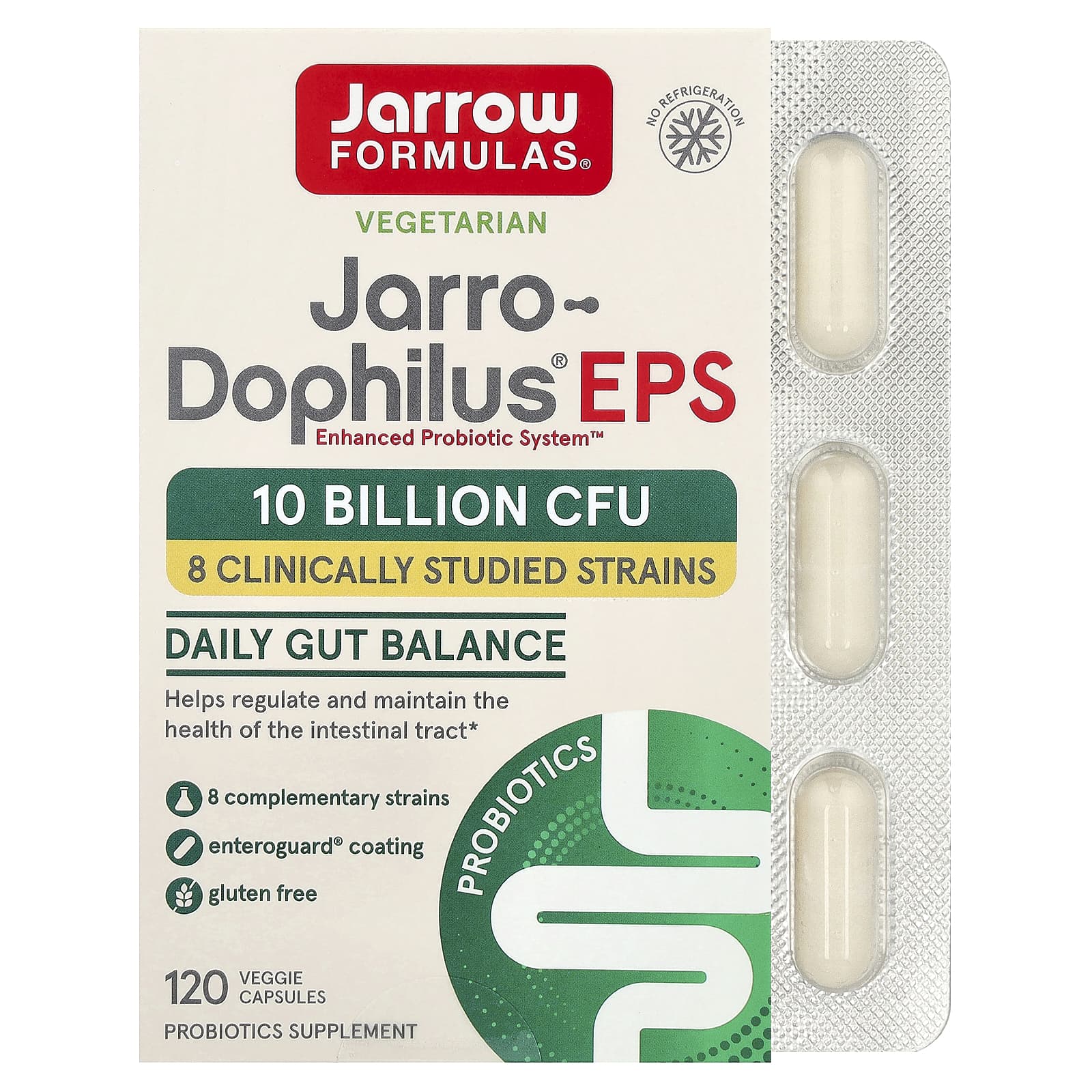
Jarrow Formulas Jarro-Dophilus EPS, 120 Veggie Caps
19,897 iHerb ratings; enteric-coated capsules.
Two capsules per serving; Amazon's buy box moves between Amazon.com and a third-party seller, so the price shifts by a dollar or two.
Jarro-Dophilus EPS gives 10 billion CFU across eight strains in enteric-coated capsules, two capsules per serving. A 120-count bottle therefore covers 60 days at about 59 cents a day on Amazon, and the iHerb price works out to about 70 cents. It holds #118 in Amazon’s probiotic category with 4.6 stars from 3,442 ratings.
Amazon’s buy box currently alternates between Amazon.com at roughly $35.44 and a third-party seller at roughly $34.44, so the price moves by a dollar or two depending on the moment. iHerb’s 19,897 ratings at 4.5 make it one of the better-tested formulas here. The two-capsule serving is the main annoyance.
Strengths
- Eight strains at 10 billion CFU per two-capsule serving
- Enteric-coated capsules, shelf-stable under 25°C
- 19,897 iHerb ratings and 3,442 on Amazon
What buyers say
“I have used different probiotics for years but Jarro-Dophilus EPS is the best I’ve used!” — iHerb verified buyer, United States, Mar 2025
“Excellent quality and thoughtful packaging — it is clear that the manufacturer cares about the user.” — iHerb verified buyer, Korea, Mar 2026
“not as good as most of their products, this product disappointed me this time, I will not buy it again nor do I recommend it” — iHerb verified buyer, United States, Apr 2024
Specs: 120 veggie capsules (60 servings) · 2 capsules daily · 10 billion CFU, 8 strains
Check price on Amazon · Check price on iHerb
6. Best value: California Gold Nutrition LactoBif 30
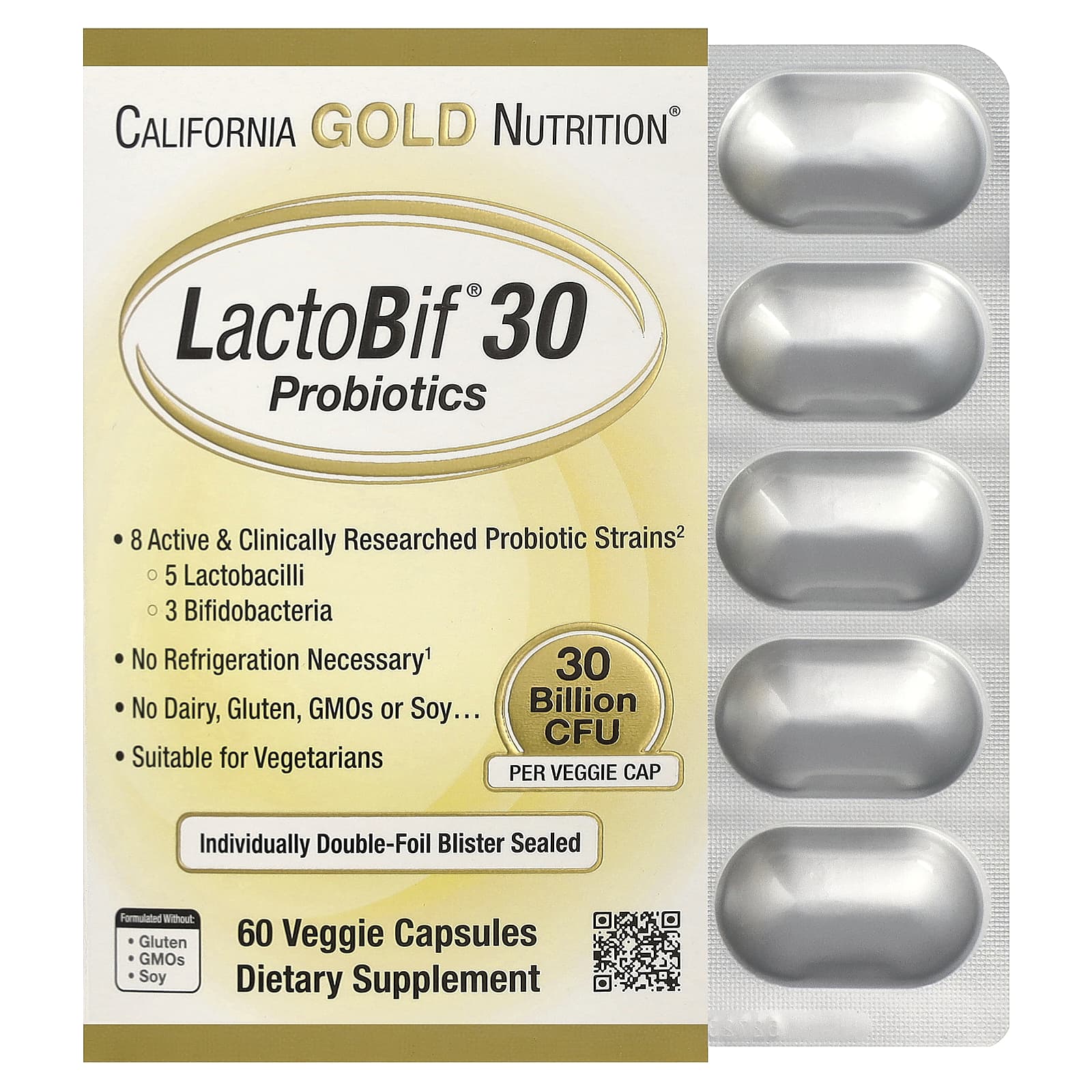
California Gold Nutrition LactoBif 30 Probiotics, 60 Veggie Capsules
173,013 iHerb ratings; individually blister-packed.
The cheapest serving here; iHerb only, because Amazon has no current offer.
Thirty-seven cents a day for 30 billion CFU and eight strains is the lowest serving cost in this guide by a clear margin. Sixty capsules cost about $21.95 on iHerb, each one individually blister-packed rather than loose in a bottle, which is unusual at this price. The 4.7-star average comes from 173,013 iHerb ratings, the largest review base here.
It is an iHerb house brand, so there is no Amazon offer at the moment and no independent brand support line. Buyers who want a recognizable name on the label should pay more for Culturelle. Buyers who want to run a three-month trial without spending $80 should start here.
Strengths
- 30 billion CFU and 8 strains for about 37 cents a day
- Individually blister-packed to limit moisture exposure
- 173,013 iHerb ratings at 4.7
What buyers say
“I noticed a big improvement in my bowel movements—before, they were really inconsistent, but now I go every morning and feel incredible.” — iHerb verified buyer, United States, Dec 2025
“Since starting this probiotic, I notice more regularity and fewer bloat-related issues during busy weeks.” — Tinglebelle, Hong Kong, Jan 2026
“However, I’m still unsure if it truly works or not. The effects are subtle, and I can’t easily measure them” — flammatus, Georgia, Dec 2025
Specs: 60 veggie capsules (60 servings) · 1 capsule daily · 30 billion CFU, 8 strains
7. Best organic formula: Garden of Life Once Daily 30 Billion
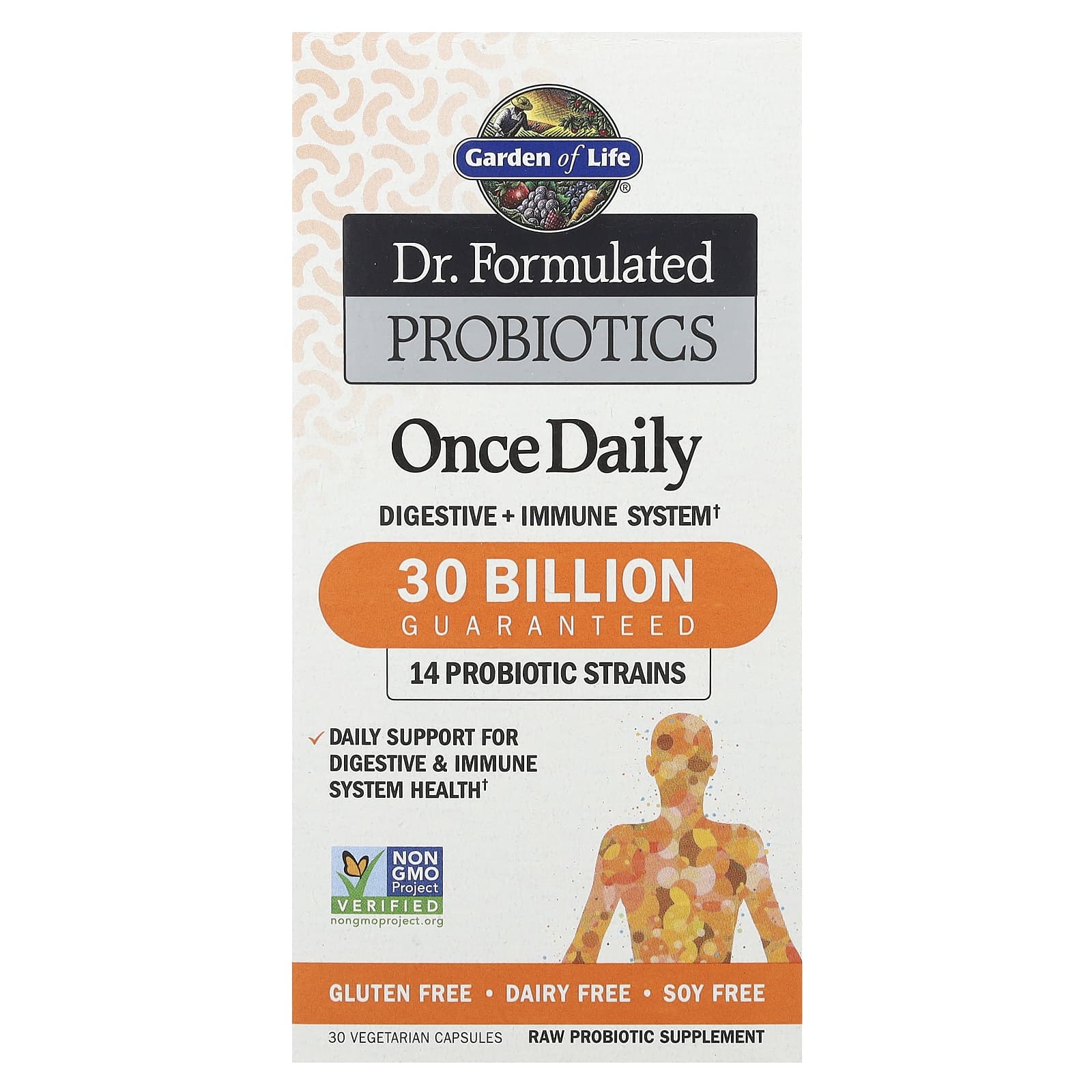
Garden of Life Dr. Formulated Probiotics Once Daily 30 Billion, 30 Veggie Caps
4.9 stars on iHerb, but from a smaller base of 84 ratings.
Organic and non-GMO, needs cool storage, and has the thinnest review sample here.
Garden of Life packs 30 billion CFU from 14 strains into one capsule, with an organic, non-GMO formula. Thirty capsules cost about $27.55 on iHerb, or 92 cents a day. It scores 4.9 stars there, the highest average in this guide, though it rests on only 84 ratings, so treat the score as a hint rather than proof.
The storage note matters more than the rating. This bottle wants temperatures at or below 22°C and is happiest refrigerated, which makes it a poor choice for a gym bag or a hot car. Amazon no longer lists this exact 30-capsule version with a buy box, so the iHerb button is the reliable route.
Strengths
- 30 billion CFU from 14 strains in one capsule
- Organic, non-GMO, and free of dairy, gluten and soy
- 4.9 stars on iHerb, the highest average here
What buyers say
“No more random bloating, my digestion feels smoother, and I’ve even noticed an improvement in my mood and energy.” — iHerb verified buyer, United States, May 2025
“I have IBS and this one really balances things out quite nicely.” — iHerb verified buyer, United States, Feb 2025
“It works well for me but You may want to take something stronger if you have gut problems” — iHerb verified buyer, United States, Apr 2025
Specs: 30 vegetarian capsules (30 servings) · 1 capsule daily · 30 billion CFU, 14 strains
8. Best digestive enzyme: Enzymedica Digest Basic
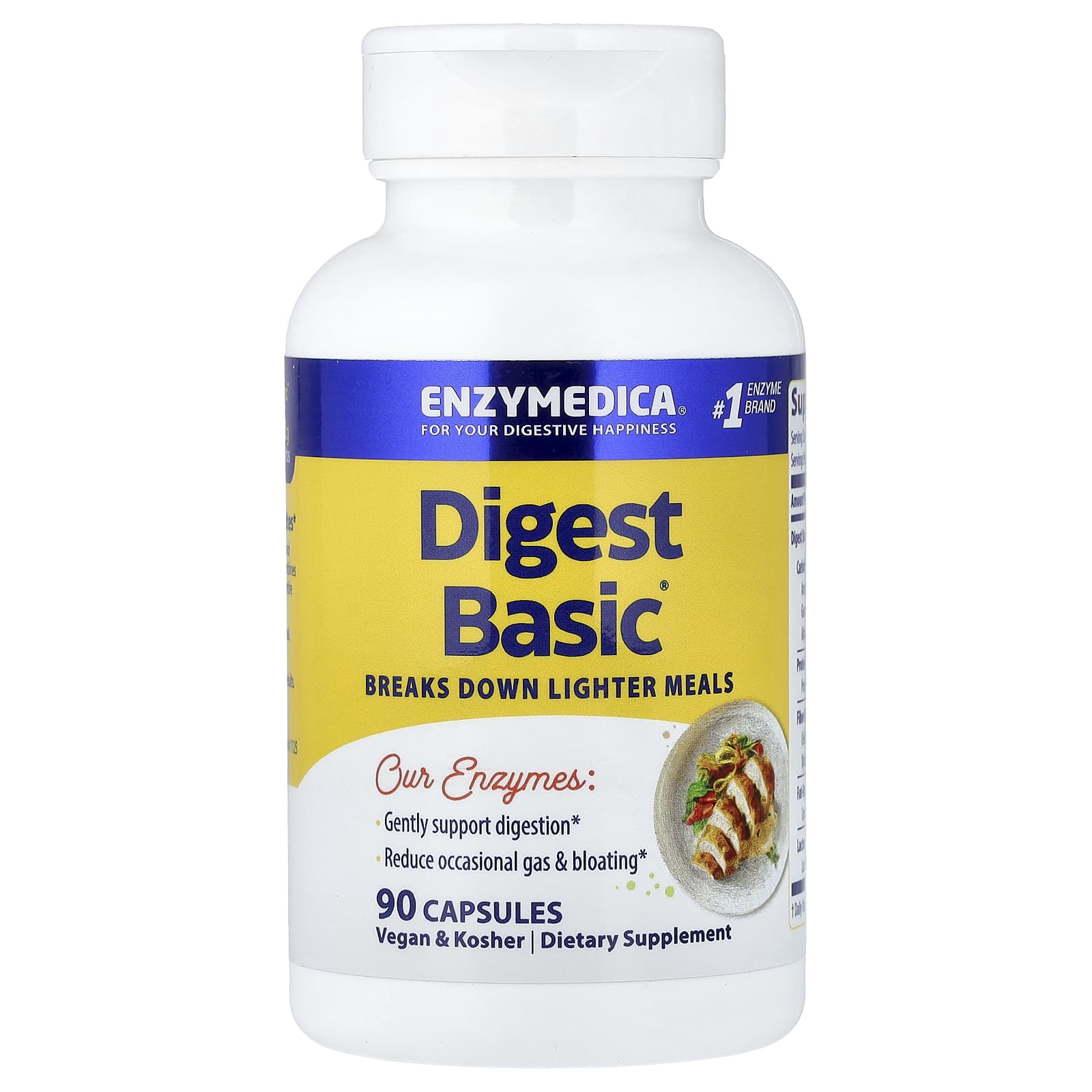
Enzymedica Digest Basic, 90 Capsules
#39 in Amazon's Multi-Enzyme category; 59,200 iHerb ratings at 4.8.
For heavy or fatty meals, not a replacement for a probiotic.
Enzymedica takes the enzyme slot because it ranks #39 in Amazon’s multi-enzyme category, well ahead of the cheaper NOW Super Enzymes at #166, and it carries 59,200 iHerb ratings at 4.8. Ninety capsules cost about $16.49, or 18 cents per capsule, and the label’s Thera-blend covers protease, amylase, lipase, cellulase and lactase.
This is for the heavy-meal problem, not the microbiome. One capsule with a fatty or carb-heavy meal is the intended use, so a bottle lasts months for occasional users. Buyers who feel fine after meals have no reason to add it, and it does not replace a probiotic that a doctor recommended.
Strengths
- #39 in Amazon’s multi-enzyme category, ahead of cheaper rivals
- 59,200 iHerb ratings at 4.8
- About 18 cents per capsule with a broad enzyme blend
What buyers say
“I’m really pleased with how well it works to support my digestion.” — Tanichka, United Kingdom, Mar 2025
“I love that there are not artificial colors or flavors and you get 180 capsules per container.” — CorinneElizabethifbbpro, Korea, Feb 2025
“While I’ve noticed a subtle difference in my digestive comfort, it hasn’t been a drastic change.” — iHerb verified buyer, United States, Jan 2024
Specs: 90 capsules (90 servings) · 1 capsule with each meal · Thera-blend multi-enzyme
Check price on Amazon · Check price on iHerb
9. Best soluble fiber: Benefiber Original
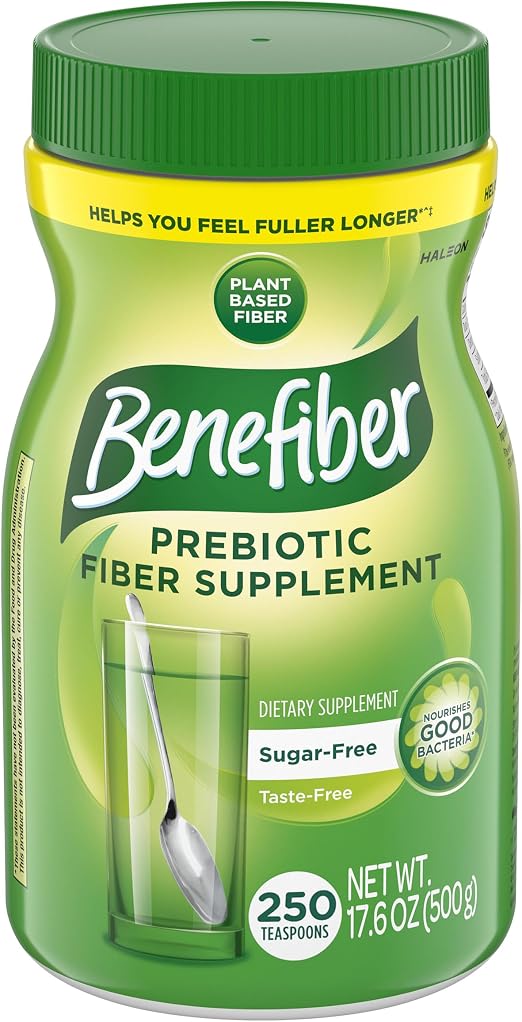
Benefiber Original Prebiotic Fiber Powder, 17.6 oz
#7 in Amazon's Dietary Fiber category; dissolves without grit.
Wheat dextrin with no taste or texture; Amazon only.
Benefiber is wheat dextrin, which dissolves clear and adds no texture to water, coffee or soup. Two teaspoons give 3 grams of fiber and no sugar, and the 17.6 oz tub holds 125 servings for about $22.98, or 18 cents each. It ranks #7 in Amazon’s dietary fiber category with 4.8 stars from 10,121 ratings.
Because it disappears into drinks, it is the easiest fiber to actually finish. The flip side is that “invisible” invites overuse: three servings in a day is 9 grams of fiber on top of food, which can cause gas if you jump there in week one. Build up over two weeks.
Strengths
- Dissolves clear with no grit, taste or sugar
- 3 grams of fiber per two teaspoons, 125 servings per tub
- #7 in Amazon’s dietary fiber category, 4.8 stars
Amazon’s individual reviews require a sign-in, so no buyer quotes are reproduced for this pick.
Specs: 17.6 oz / 499 g (125 servings) · 2 teaspoons, 1-3 times daily · 3 g fiber per serving
10. Best psyllium: Metamucil 4-in-1

Metamucil 4-in-1 Psyllium Fiber, Sugar-Free Orange, 180 Servings
#1 in Amazon's Dietary Fiber category with 36,057 ratings.
Thickens fast and needs a full glass of water; the orange version is sweetened.
Metamucil is the #1 seller in Amazon’s dietary fiber category, with 36,057 ratings at 4.7 stars. Each serving of the sugar-free orange powder supplies 2.4 grams of soluble fiber from psyllium husk, and the 180-serving tub costs about $34.99, or 19 cents a serving. It is the cheapest way here to add fiber to a routine that already includes a full glass of water.
Psyllium works differently from wheat dextrin: it gels, so it softens stool and adds bulk rather than dissolving invisibly. That also means it needs water, taken promptly, and it should not be mixed into a thick smoothie where the liquid is already spoken for.
Strengths
- #1 in Amazon’s dietary fiber category, 36,057 ratings
- 2.4 g soluble fiber per serving from psyllium husk
- 180 servings per tub at about 19 cents each
Amazon’s individual reviews require a sign-in, so no buyer quotes are reproduced for this pick.
Specs: 36.8 oz (180 servings) · 2 rounded teaspoons, 1-3 times daily · 2.4 g soluble fiber
How we picked
- Amazon category rankings, then the label — probiotics were checked against Amazon’s Acidophilus and probiotic categories, enzymes against multi-enzyme, fiber against dietary fiber. Rank tells you what is selling; the Supplement Facts panel tells you what you are actually swallowing, and the two often disagree.
- Cost per serving, not per bottle — a $24.97 bottle of 30 capsules costs more per day than a $21.95 bottle of 60. CFU per dollar matters as much as CFU per capsule, which is why a 1-billion product can be the most expensive pick here.
- Strain and format before strain count — one strain with trials behind it beats ten strains with no research, and a delayed-release capsule or a blister pack usually signals a more careful formula. Storage instructions decided two picks outright.
- Reviews with the complaints left in — quotes come from iHerb verified purchases, copied as written. Gas, bloating, a 4.4-star average and a one-star rejection all stayed in.
FAQ
Do probiotics need to be refrigerated? Only if the label says so. Culturelle, Align, Renew Life, Jarrow and Physician’s Choice are shelf-stable; Garden of Life’s bottle prefers 22°C or cooler. A shelf-stable bottle left in a hot car still loses viability, so treat “no refrigeration” as a label claim rather than permission to bake it.
Is 60 billion CFU better than 10 billion? Not automatically, and the count does not say which strains you are getting. Culturelle’s 10 billion is one studied strain (LGG); Physician’s Choice’s 60 billion is split across ten strains. Match the strain to your problem, then compare cost per serving within that group.
Can I take a probiotic and a digestive enzyme together? Yes, they do different jobs. Enzymes act on the meal in your stomach; probiotics are live cultures that settle in the gut over weeks. If you are adding both, start the enzyme at one meal a day so you can tell which one is causing gas or loose stools.
How long before I notice anything? Give it four to six weeks at the labeled dose, which is why the cost per serving matters: a 60-serving bottle gives you a real trial, a 16-serving bottle does not. Stop and talk to a clinician if symptoms worsen, and do not use probiotics to self-treat a persistent change in bowel habits.
A safety note
Probiotics are low risk for healthy adults, but they are not risk-free for everyone. People with a weakened immune system, a central line, short bowel syndrome or a critical illness should not start a probiotic without a doctor’s approval, because rare bloodstream infections have been reported. Stop if you develop fever, severe abdominal pain or bloody diarrhea.
Psyllium and wheat dextrin need water and a slow ramp; starting at three servings a day causes bloating. Anyone with a swallowing disorder should avoid psyllium powder, and fiber can interfere with how some medications are absorbed, so space them by two hours. Digestive enzymes can affect blood sugar in people with diabetes, and anyone with pancreatitis or a digestive disease should ask a clinician before using them.
These products do not diagnose or treat IBS, Crohn’s disease, ulcerative colitis or an infection. If your bowel habits change for more than two weeks, or you see blood, get medical advice rather than another bottle. This article is general information, not medical advice.
